Participating in God’s Creative Work
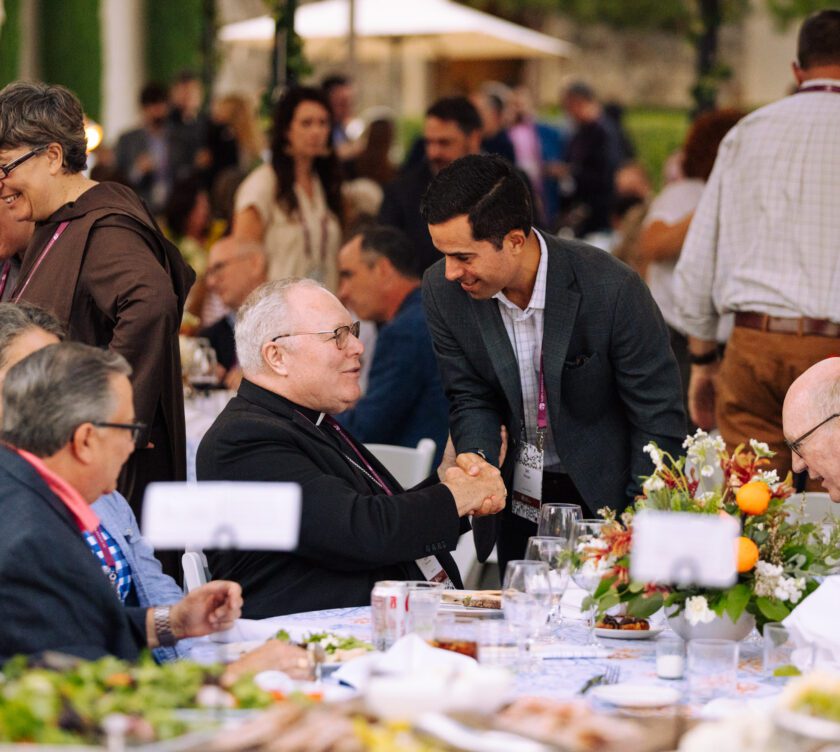
Each year, the Napa Institute brings together Catholic leaders, clergy, entrepreneurs, artists, scholars, philanthropists, and families to consider how our faith should shape the way we live, work, create, and engage the culture. At our 2027 Conference, July 28–August 1 at The Meritage Resort and Spa in Napa, we will explore a fundamental Christian idea: we are called to be co-workers with God.
St. Paul gives us the phrase directly: “For we are God’s co-workers” (1 Corinthians 3:9). This does not mean that human beings are equal partners with God. God alone creates ex nihilo—out of nothing. Rather, God freely invites His creatures to participate in His work.
Genesis tells us that God created mankind in His image and likeness (Genesis 1:27). We therefore possess intelligence, imagination, freedom, and the capacity to create. Yet none of us begins with nothing. Our abilities, opportunities, relationships, and resources are gifts. As St. Paul asks, “What do you possess that you have not received?” (1 Corinthians 4:7).
The Catechism explains that God gives His creatures “the dignity of acting on their own” and of “cooperating in the accomplishment of his plan” (CCC 306). This is the foundation of what we might call co-creation with God—or, more precisely, becoming co-workers with God and participants in His creative work.
Everything Begins as Gift
Christ’s Parable of the Talents teaches that God’s gifts are not simply to be preserved; they are entrusted to us so they can bear fruit. The question for each of us is: What has God given me, and what am I going to do with it?
This transforms the Christian understanding of work. Genesis tells us that Adam was placed in the garden “to cultivate and care for it” (Genesis 2:15). St. John Paul II developed this idea in Laborem Exercens, teaching that through work the human person participates in the activity of the Creator.
The entrepreneur who builds a company, the farmer who cultivates the land, the artist who reveals beauty, the scientist who makes a discovery, the teacher who forms a mind, and the philanthropist who directs resources toward human flourishing all take something received and help make it fruitful.
The family offers an even more profound example. A husband and wife cooperate with God’s creative love in bringing new human life into the world.
Grace and Human Freedom
Christianity does not teach us to sit back and wait for God to act. Nor does it teach that everything depends upon ourselves.
The Catholic answer is cooperation.
We pray intensely, and we work intensely. We discern, plan, study, invest, take risks, persevere through failure, and accept responsibility. At the same time, we recognize that God’s grace is present.
The Blessed Virgin Mary provides the supreme example. At the Annunciation, God initiates and Mary freely responds: “May it be done to me according to your word” (Luke 1:38). God calls. Grace is offered. The human person responds—and something extraordinary happens.
The saints repeated this pattern in countless ways. They founded religious communities, schools, universities, hospitals, missions, and charitable institutions. Others produced great works of theology, literature, architecture, and art or transformed the world quietly through family and community life. God gives different gifts because He calls us to different vocations.
Creativity in a New Age
This understanding has particular urgency today.
St. John Paul II’s Letter to Artists reminds us that God alone is Creator in the absolute sense, while human beings take what already exists and give it new form and meaning. Film, music, painting, theater, architecture, and literature can reveal truth, goodness, and beauty and help prepare the human heart for an encounter with God.
Technology and artificial intelligence present a similar challenge. The most important question is no longer simply, What can technology do? We must ask: What should it do? What is it for? How can it serve the authentic good of the human person?
Human creativity also requires freedom. Catholic social teaching’s principle of subsidiarity recognizes the essential role of families, churches, businesses, schools, charities, and voluntary associations. America’s extraordinary history of entrepreneurship, invention, philanthropy, and religious institutions demonstrates what can happen when human initiative is given room to flourish.
Freedom permits experimentation. It permits failure. Failure produces learning, and learning can lead to extraordinary innovation. Government has an essential responsibility to protect justice and the common good, but it should not unnecessarily assume responsibilities that properly belong to individuals, families, churches, businesses, and communities.
Our Vocation
Ultimately, this becomes personal.
I have wrestled with questions about God and creation since I was a young child: Who created God? Why are we here? What is God’s role in our lives? How much depends upon Him, and how much depends upon us?
These are ultimately questions of vocation.
We ask for grace—and then we act. We discern, create, build, invest, teach, evangelize, raise families, establish institutions, make art, develop technology, and serve others.
God is the Creator. We are His creatures. Everything begins as His gift. Yet God gives us freedom and invites us to participate in His work.
“For we are God’s co-workers.” — 1 Corinthians 3:9
That is both an extraordinary privilege and an extraordinary responsibility.
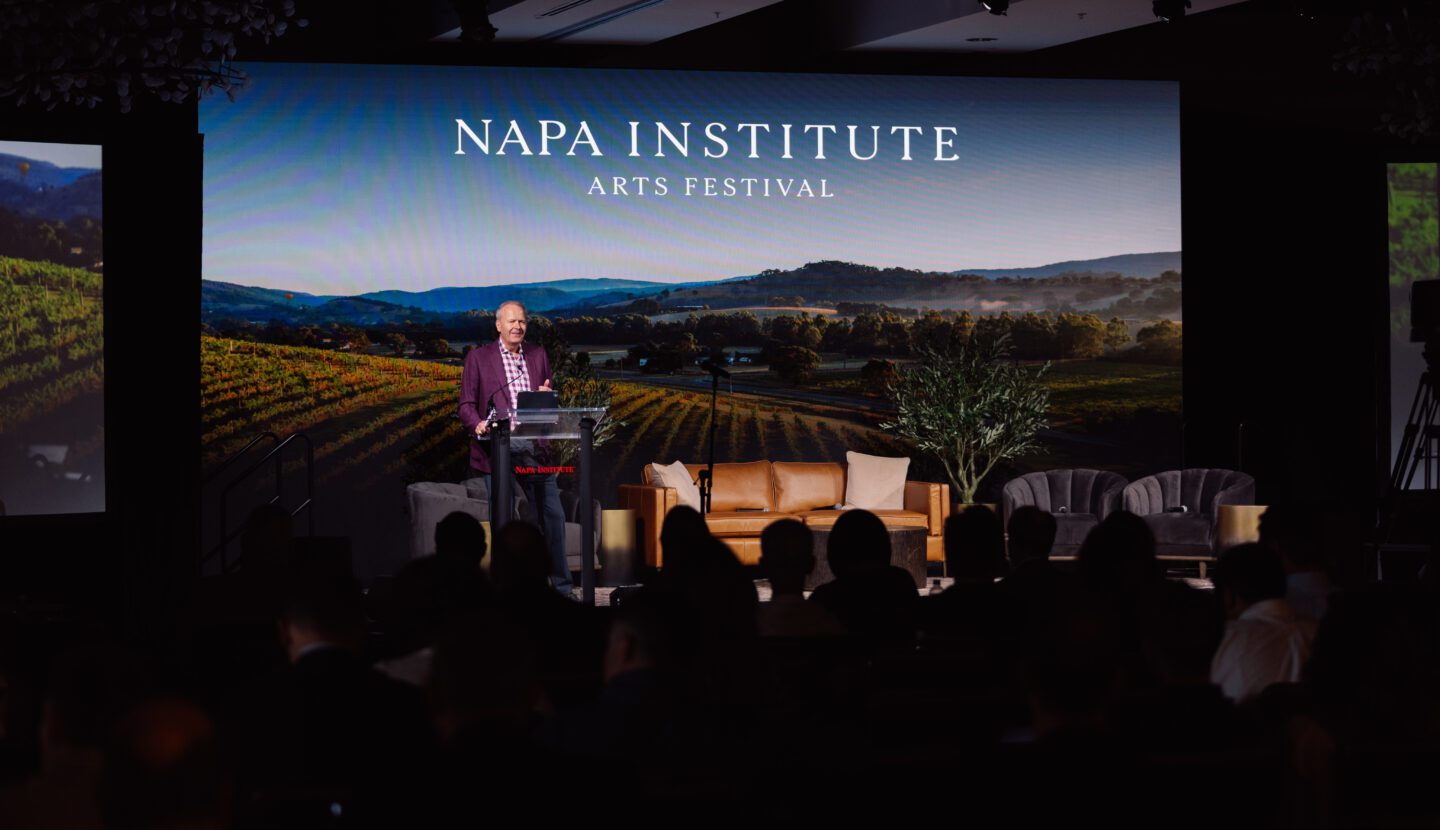
Please join us for the Napa Institute Arts Festival, July 26–27, and the 2027 Summer Conference, July 28–August 1, at The Meritage Resort and Spa in Napa, as we explore what it means to become faithful co-workers with God.
Tim Busch
CEO and Co-Founder, Napa Institute