Friends of Napa Institute: New Projects & Initiatives Renewing the Church and Transforming Culture | February 2026
Catholic leaders across publishing, media, scholarship, and public life are launching bold new projects that engage today’s cultural moment with clarity, beauty, and conviction. We are eager to highlight several new works from the friends of Napa Institute who are doing great work to illuminate truth and bring about human flourishing.
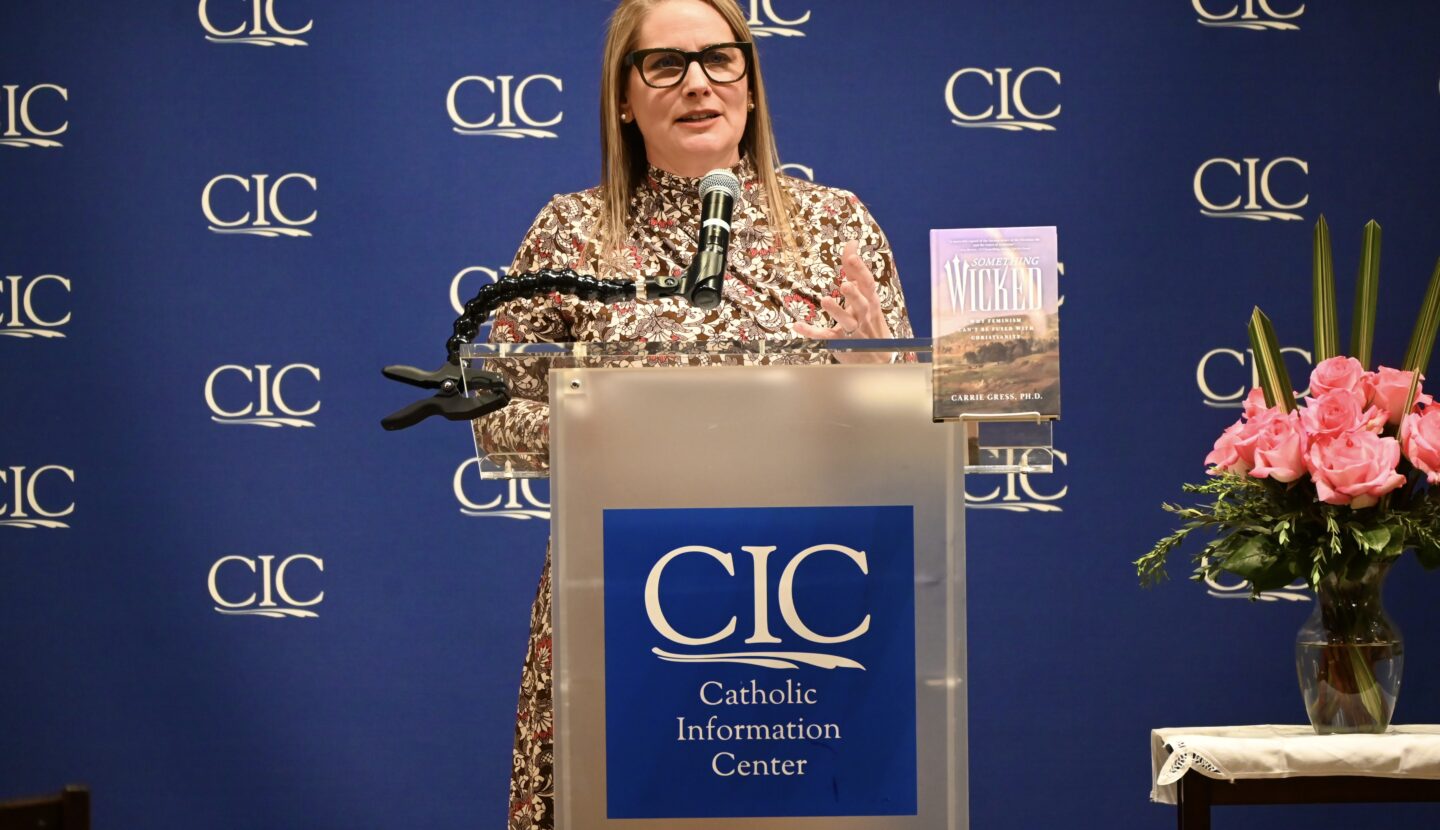
Carrie Gress — Something Wicked: Why Feminism Can’t Be Fused with Christianity
Dr. Carrie Gress, scholar at the Catholic University of America’s Institute of Human Ecology and editor of Theology of Home, has spent years examining feminism, the sexual revolution, and their cultural consequences. In her latest book, Something Wicked, Gress argues that feminism has succeeded not merely as an ideology, but as a rival religion—one that subtly mimics Christianity while undermining its foundations.
Rather than focusing only on feminism’s outcomes, such as abortion or gender ideology, Gress exposes its deeper spiritual structure: a “shadow church” with its own commandments, virtues, evangelization, and sacrament. Drawing from history, psychology, philosophy, and culture, she traces feminism’s anti-Christian origins and explains why autonomy severed from truth cannot lead to happiness.
The book debuted at the top of multiple charts, selling out on Amazon within days. Gress recently spoke at the Catholic Information Center (link here), outlining the hidden roots of feminism and why Christians must address the ideology itself.
EWTN Studios — Seeking Beauty with David Henrie
Seeking Beauty is a new EWTN Studios adventure documentary series that invites audiences to rediscover how beauty draws the human heart toward God. Hosted by actor, director, and producer David Henrie, the series explores culture, architecture, art, food, and music as pathways to the sacred.
Traveling alongside local artisans, contemporary artists, and expert guides, Henrie shows how our senses become doorways to transcendence. The series offers a joyful and accessible approach to evangelization, meeting viewers not with arguments, but with wonder.
Henrie, who has starred in major mainstream roles, has increasingly become a leading advocate for creating content that feeds the soul rather than corrodes it. A new Board Member of Napa Institute and Chair of the Napa Institute Arts Festival, Henrie embodies a renewed Catholic engagement with culture, one that reclaims beauty as essential, not optional. Because in the end, all of us are seeking beauty.
White Collars Podcast — Faith, Work, and the Life of the Church
White Collars is a new podcast from Veritas Catholic Network examining the intersection of Catholic business leadership and the life of the Church. The show is hosted by Fr. Colin Lomnitzer of the Diocese of Bridgeport and Charles Busch, a Napa Institute collaborator who leads Shepherds Circle priest programming.
Together, they explore how faith shapes leadership, vocation, and moral responsibility in professional life. Conversations address real-world challenges Catholics face in business—ambition, integrity, stewardship, and the tension between success and sanctity.
Fr. Lomnitzer, a member of the Napa Institute Shepherds Circle, brings pastoral and theological insight, while Busch offers experience grounded in business experience and leadership development. White Collars reflects a growing recognition that renewal in the Church must extend into the workplace, where faith is lived daily and often tested most acutely.
Frank DeVito — JD Vance and the Future of the Republican Party
In JD Vance and the Future of the Republican Party, Napa Legal Senior Counsel and Director of Content Frank DeVito examines the rise of one of the most influential political thinkers in America today. More than a biography, the book is an analysis of ideas, movements, and political realignment.
DeVito traces Vance’s journey from a broken home in Ohio to the Marines, Yale Law School, Silicon Valley, and national leadership. Unlike many politicians, Vance is a public intellectual who wrestled with questions of family breakdown, class, and economic dignity long before holding office.
DeVito argues that Vance represents a potential reorientation of the GOP toward a pro-family, pro-worker vision rooted in the middle class. As the post-Trump era unfolds, the book makes the case that Vance’s clarity and seriousness may shape what comes next—for both the party and the country.