Published in the National Catholic Register: Found Here
Pope Leo XIV recently granted a Guadalupan Jubilee Year to mark the 50th anniversary of the dedication of the Basilica of Santa María de Guadalupe in Mexico City and the transfer of the sacred image of Our Lady of Guadalupe there. The year will begin on Oct. 12 and run through Oct. 12, 2027.
For Catholics throughout the Americas — and indeed, around the world — the jubilee is a beautiful opportunity to renew devotion to Our Lady of Guadalupe. It is fitting, too, that the anniversary centers not only on a church, but on an image of the Virgin Mary.
Nearly five centuries after the apparitions at Tepeyac, millions still come to the basilica to stand before the image carried on St. Juan Diego’s tilma. When Juan Diego opened his cloak before the bishop in 1531, roses fell to the floor and the image of Mary appeared upon the fabric. The image became inseparable from Mary’s message: “Am I not here, I who am your Mother?”
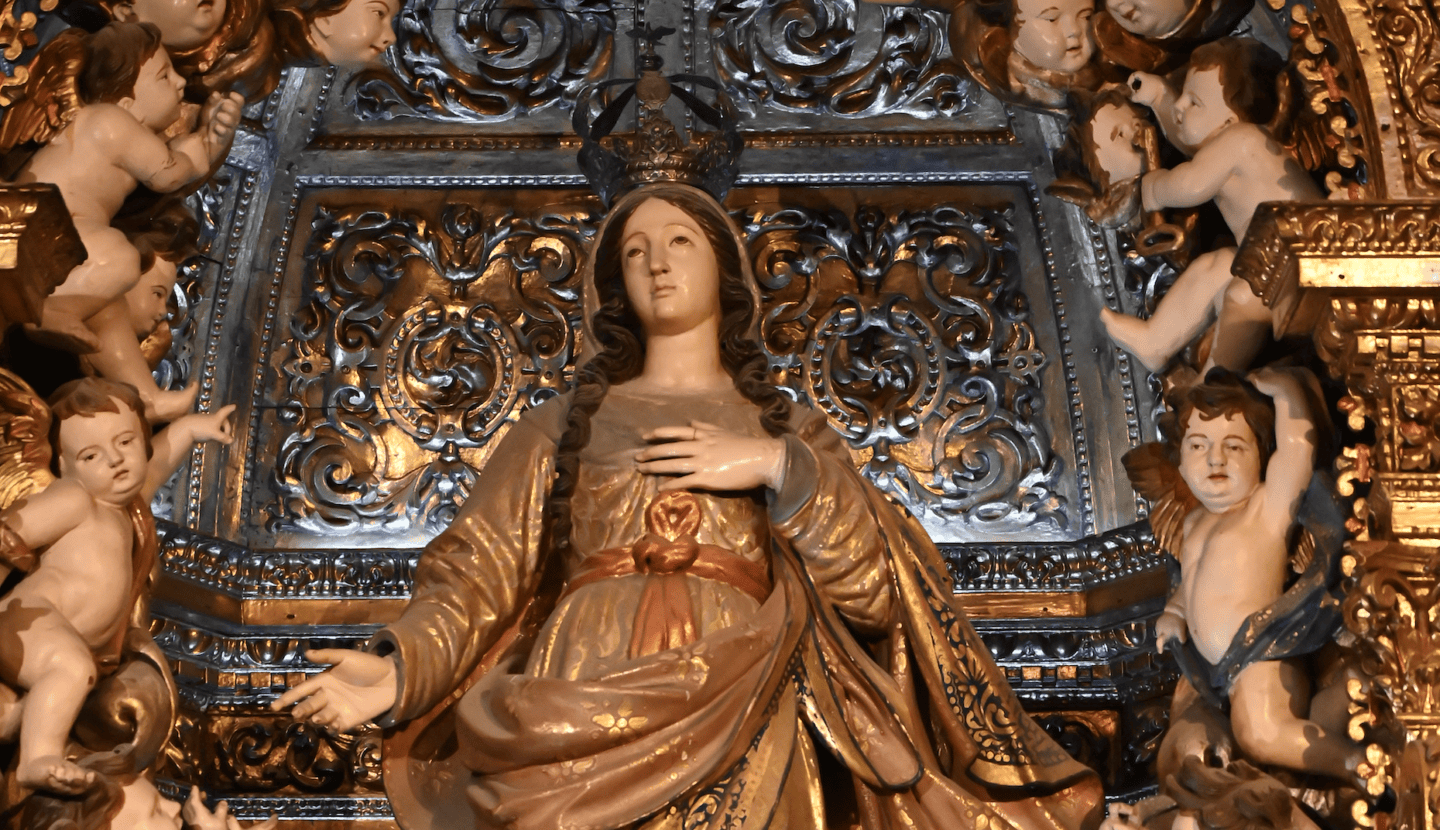
For Catholics, sacred images matter because they make visible what can otherwise seem distant. They remind us that the saints were real people, that the mysteries of faith entered human history, and that heaven is not indifferent to the suffering of earth.
For this reason, the jubilee has me thinking about the many stories of Marian images and shrines surviving catastrophe. You’ve probably heard of at least one.
In Napa Valley in 2017, the Atlas Fire left a blackened landscape around the Omlin family’s property. During the evacuation, the family’s mother sat in a car, praying the Rosary. When they returned, an outdoor statue of Mary remained standing in their yard, darkened by the fire. For the family, it became a visible sign that prayer had not been in vain — that Mary remained near.
In Lahaina in 2023, wildfire devastated the historic Maui town, taking lives and destroying homes, businesses and churches. Yet Maria Lanakila Catholic Church — Our Lady of Victory — remained standing amid the ruins, giving hope to families who lost everything.
A year later, wildfire tore through Jasper, Alberta, destroying roughly a third of the town’s structures. But Our Lady of Lourdes Catholic Church survived. And in northern Manitoba, after St. Theresa Point Catholic Church was destroyed by fire in 2021, an outdoor statue of Mary remained standing.
There are many similar stories. After tornadoes struck Dayton, Ohio, in 2019, a statue of Mary remained standing beside the collapsed bell tower at Queen of Martyrs Catholic Church. After Colorado’s Marshall Fire in 2021, a soot-covered Marian statue stood amid the ruins of a family home. And when Notre-Dame Cathedral burned in Paris in 2019, the medieval Virgin of Paris survived and was eventually carried back into the restored cathedral in procession.
The story that moves me most, however, comes from last year.
After the Eaton Fire swept through Southern California in January 2025, Peter and Jackie Halpin returned to the ruins of their home in Altadena, where they found a statue of the Virgin Mary still standing. The family gathered around it and sang the Regina Caeli — a moment that spread widely on social media and television.
The scene beautifully captured the reality that grief and gratitude can coexist. Faith does not require pretending that loss is small. It insists only that loss is not the whole story, and Mary constantly reminds us of this.
Mary herself was not spared suffering. She stood beneath the cross, watching her Son suffer and die. She is not a Mother who promises that nothing terrible will happen. She is a Mother who remains with us when the worst befalls.
That is why a statue standing in ashes can speak so powerfully. We need not declare every such survival a miracle; fires move unpredictably, and stone, wind, walls and circumstance all affect what survives. But Catholics have always understood that ordinary events can carry extraordinary meaning.
When Mary endures, she is not saying, “You will not suffer.” Rather, she is saying, “You are not abandoned in your suffering.” And often the image becomes a gathering place from which something else begins: prayer, charity, rebuilding, the recovery of a community’s memory and hope.
This is also what makes the new Guadalupan Jubilee so timely. The image at Guadalupe is not simply an artifact to be admired. It is an opportunity to encounter our Mother anew. Mary appeared to Juan Diego, a humble man, and sent him back into the world with a message. The sign she left behind pointed beyond itself — to God’s nearness, to maternal care and to hope for a people living through upheaval.
Across centuries, the setting changes: Tepeyac, Napa, Lahaina, Jasper, Altadena, Dayton, Boulder County, Paris. The message does not. Mary does not promise a world without crosses. She points us toward Christ in the midst of them. Whether she appears to the people of God, as at Guadalupe, or whether her image is found standing unexpectedly amid the ashes, Mary draws us closer to her Son and reminds us: “Am I not here, I who am your Mother?”
For a world so often beset by crisis and disaster, could any message be more hopeful?