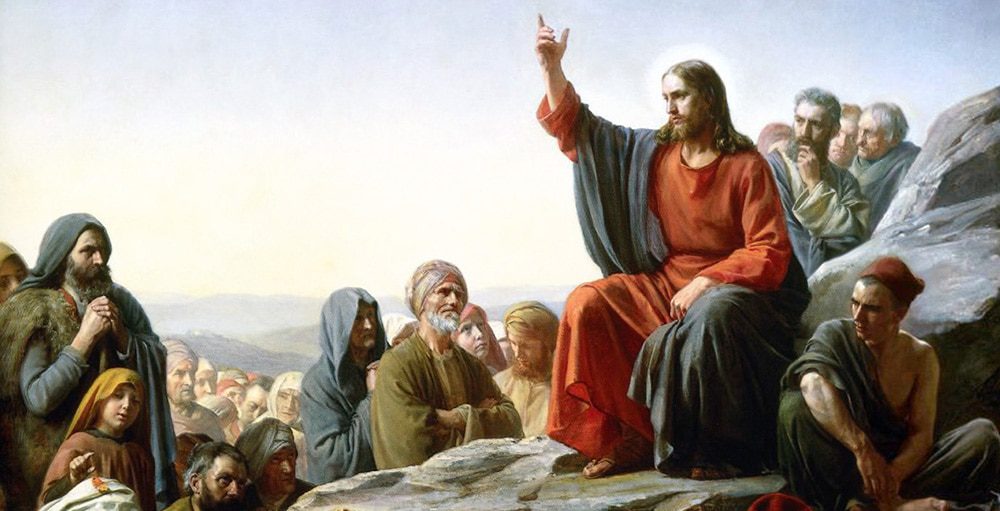
“That they may all be one; as you, Father, are in me and I in you, that they also may be in us, so that the world may believe that you have sent me.”
— John 17:21 (RSV-CE)
Last year marked the beginning of an important new initiative at the Napa Institute: our Ecumenical Forum.
The forum was conceived as a serious dialogue centered on Jesus Christ, Sacred Scripture, and the pursuit of Christian unity rooted in truth. What began as a small exploratory gathering in March 2025 matured into a full inaugural forum held in October at the University Club in New York City, just steps from St. Patrick’s Cathedral.
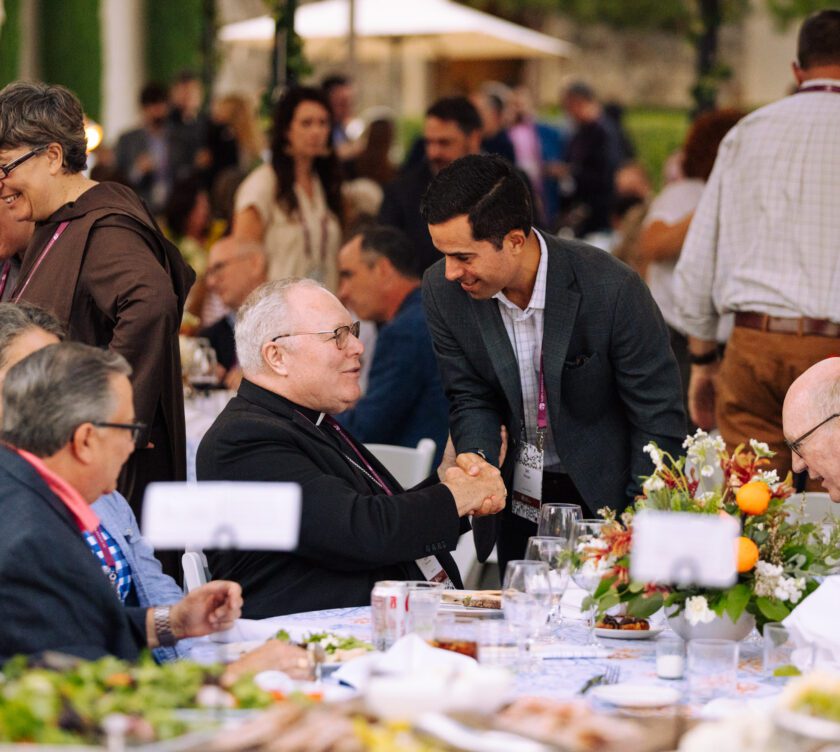
Approximately sixty participants attended, half Catholic and half Protestant but all professing the Apostles’ Creed and the Nicene Creed. The atmosphere was prayerful, intellectually serious, and deeply fraternal. By every measure, it was a remarkable success.
The inspiration for this forum emerged organically from the Napa Institute’s salon dinners, which bring together Catholics of differing theological, cultural, and political perspectives. Salon dinners have demonstrated that authentic friendship and respectful dialogue are not only possible amid disagreement but essential to renewing the Church’s witness.
So we asked a natural next question: Why not extend this model to our separated Christian brothers and sisters?
The need is real. Christianity today faces profound challenges—both internal and external. Catholics and Protestants largely share the same Scripture, yet divergent interpretations have led to growing doctrinal fragmentation. Without a central magisterium, many Protestant denominations have struggled to maintain consistent Biblical teaching on critical moral issues, including abortion, marriage, and human anthropology. Thankfully, many Protestants have remained strong on these critical moral issues.
Many Protestant Christians today feel spiritually displaced, grieving (and leaving) churches that have abandoned biblical authority in favor of cultural accommodation. But Catholics and many conservative Protestants alike continue to affirm a foundational Christian principle: love the sinner while rejecting the sin—a phrase that captures Christ’s own posture of mercy united to truth (cf. John 8:11).
As we approach historically significant milestones—the year 2030, marking approximately 2,000 years since the beginning of Christ’s public ministry, and 2033, commemorating the Passion, Crucifixion, and Resurrection—the call to Christian unity grows louder. Not unity at the expense of truth, but unity grounded in Jesus Christ.
Against this backdrop, we’ve scheduled our next Ecumenical Forum on March 18, 2026, at the Museum of the Bible in Washington, D.C. Many Catholics—and even many Protestants—are unfamiliar with this extraordinary institution, founded by Steve and Jackie Green, the family behind Hobby Lobby. The Greens, Evangelical Protestant Christians with deep respect for historic Christianity, envisioned a world-class facility dedicated to the impact, transmission, and authority of the Bible, located just blocks from the U.S. Capitol.
The museum is striking not only in scale but in spirit. It includes Vatican-related exhibits, presentations honoring the Blessed Virgin Mary from a Catholic perspective, a theater seating roughly 300, conference facilities, and on-site accommodations for scholars and benefactors. It is, without exaggeration, a pilgrimage-worthy destination.
Museum leadership has granted permission for the celebration of a Roman Catholic Mass during the forum—at 12:30 p.m., in the heart of the day’s dialogue. This Mass, celebrated according to the Ordinariate form of the Roman Rite, will be the first Catholic Mass ever offered inside the Museum of the Bible. The celebrant will be Bishop Steven Lopes, head of the Personal Ordinariate of the Chair of Saint Peter, established by Pope Benedict XVI in Anglicanorum Coetibus (2009).
The Ordinariate uniquely welcomes former Anglicans into full communion with the Catholic Church while preserving elements of their liturgical and spiritual patrimony. Married priests are permitted under specific conditions, demonstrating that the Church already accommodates such vocations within apostolic tradition. The liturgy itself reflects a reverent English expression of the Roman Rite, deeply rooted in the Church’s history.
This moment—Catholic Mass proclaimed in a Protestant-founded Bible museum—embodies the very prayer of Christ: that they may all be one.
As we prepare for the Ecumenical Forum, we pray for unity and the courage to pursue it. And above all, we pray that Christ’s prayer to the Father may continue to unfold in our time—drawing all who seek truth toward the fullness of communion He established in His Church.